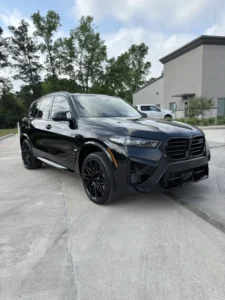

Window tint percentages determine how much visible light passes through a vehicle’s glass, which directly affects how well a driver can see, how much privacy the cabin has, and how safely the vehicle performs in different lighting conditions. Lower VLT (Visible Light Transmission) values create darker glass with stronger privacy but reduced nighttime visibility. Higher VLT values allow more light in, improving clarity and reaction time. The key point is that tint is not just cosmetic; it is a measurable safety and comfort variable that changes real driving behavior.
Visibility–Privacy–Safety Balance Framework (How Professionals Evaluate Tint)
In professional installations, Woodlands window tinting selection is guided by a structured performance model rather than appearance alone. This ensures the vehicle remains safe to operate in real-world conditions.
Core Evaluation Factors
- Visibility Index: How clearly road hazards, pedestrians, and lane markings are perceived
- Privacy Shielding: Level of visual concealment from outside observers
- Safety Margin: Driver reaction time in low-light or high-glare conditions
- Thermal Load Reduction: Heat reduction inside the cabin under sunlight exposure
- Optical Accuracy: Whether the film maintains distortion-free visibility
This framework is used because tint performance is multi-dimensional. A film that looks “good” may still reduce safety if it limits visibility too aggressively.
What Window Tint Percentage (VLT) Actually Means
Visible Light Transmission (VLT) measures the percentage of light that passes through both the glass and the film. It is important to note that factory glass already has a built-in tint, so the final results vary by vehicle make and model.
Specification Breakdown
- VLT (Visible Light Transmission): Percentage of visible light passing through glass
- IR Rejection: Reduction of infrared heat energy entering the cabin
- UV Blocking Efficiency: Ability to block ultraviolet radiation (often up to 99%)
- Optical Clarity: Resistance to haze, distortion, or visual blur
- Base Glass Tint: Pre-existing factory tint that affects final darkness
Even small differences in VLT can feel significant once installed because human vision adapts quickly to brightness changes, especially in low-light driving.
How Tint Percentage Changes Real Driving Visibility
The effect of Woodlands TX window tinting becomes more noticeable as lighting conditions decrease. During the day, the human eye compensates for differences in brightness, but at night, reduced light transmission has a stronger impact on perception and reaction time.
Real-World Visibility Comparison
| VLT Level | Day Driving Visibility | Night Driving Visibility | Practical Effect |
| 70% | Very high | Very high | Almost clear glass feel |
| 50% | High | Good | Balanced comfort and clarity |
| 35% | Moderate-high | Moderate | Common daily-use level |
| 20% | Reduced in shade | Low | Noticeable visibility loss at night |
| 5% | Very low | Very poor | Maximum privacy, minimal visibility |
Practical Driving Insight
In real installation experience, the biggest adjustment drivers report happens between 35% and 20%. This is where night-driving comfort begins to decline noticeably, especially in parking lots, on unlit roads, or when reversing.
This is particularly important in mixed-lighting environments, such as suburban road networks, where lighting conditions change frequently. In areas like Alden Bridge, shaded streets combined with evening traffic can make lower VLT levels feel significantly darker than expected. In Panther Creek, tree coverage reduces ambient light even during dusk, increasing reliance on headlights. Meanwhile, in Sterling Ridge, longer commutes during low-light hours make visibility consistency more important than maximum privacy.
Privacy vs Safety: The Real Tradeoff Most Drivers Misunderstand
A common misconception is that a darker tint is always better. In reality, privacy improves as visibility decreases, but only up to the point where safety is affected.
Practical Tradeoff Breakdown
- 5–20% VLT (Dark Tint Range)
- Strong privacy from outside view
- Reduced ability to detect pedestrians and obstacles at night
- Higher dependence on street lighting and headlights
- 30–50% VLT (Balanced Range)
- Good privacy without excessive visibility loss
- Safer night driving performance
- Suitable for daily commuting environments
- 60–70% VLT (Light Tint Range)
- Minimal privacy advantage
- Excellent visibility in all conditions
- Strongest safety performance for night driving
The safest choice is rarely the darkest; it is the most balanced for actual driving conditions.
Automotive Protection and Long-Term Interior Preservation
Beyond visibility, tint plays a major role in protecting the vehicle’s interior from long-term environmental damage. UV exposure and heat are two of the primary causes of interior degradation.
Functional Benefits of Tint
- Reduces UV exposure that fades leather, vinyl, and dashboards
- Limits heat buildup when parked under direct sunlight
- Helps reduce AC workload, improving cabin efficiency
- Improves overall comfort during extended driving periods
High-quality films are designed to prioritize performance consistency over mere darkness, which is why modern tinting is considered part of vehicle preservation rather than styling alone.
Real Installation Insight: Why Tint Must Be Customized
Professional installers do not apply the same tint level to every vehicle. Instead, recommendations are based on how and where the vehicle is used.
Key factors include:
- Driving schedule (daytime vs nighttime use)
- Parking exposure (garage vs outdoor parking)
- Vehicle type (sedan, SUV, performance build)
- Glass angle and curvature
- Legal compliance requirements
For example, many customers searching for window tint in Woodlands solutions are surprised to learn that ceramic films at moderate VLT levels often perform better overall than darker dyed films, especially in hot climates where heat rejection is more important than extreme privacy.
Definition List: Tint Film Types Explained Clearly
- Dyed Film: Basic tint layer focused on appearance; limited heat rejection; may fade over time
- Carbon Film: More stable coloration, improved heat resistance, no electronic interference
- Metalized Film: Reflective layer that blocks heat but may affect GPS or radio signals
- Ceramic Film: Advanced nano-ceramic technology offering strong heat rejection, UV protection, and high optical clarity
Ceramic films are widely preferred in modern automotive applications because they deliver performance without forcing drivers to choose excessively dark tints.
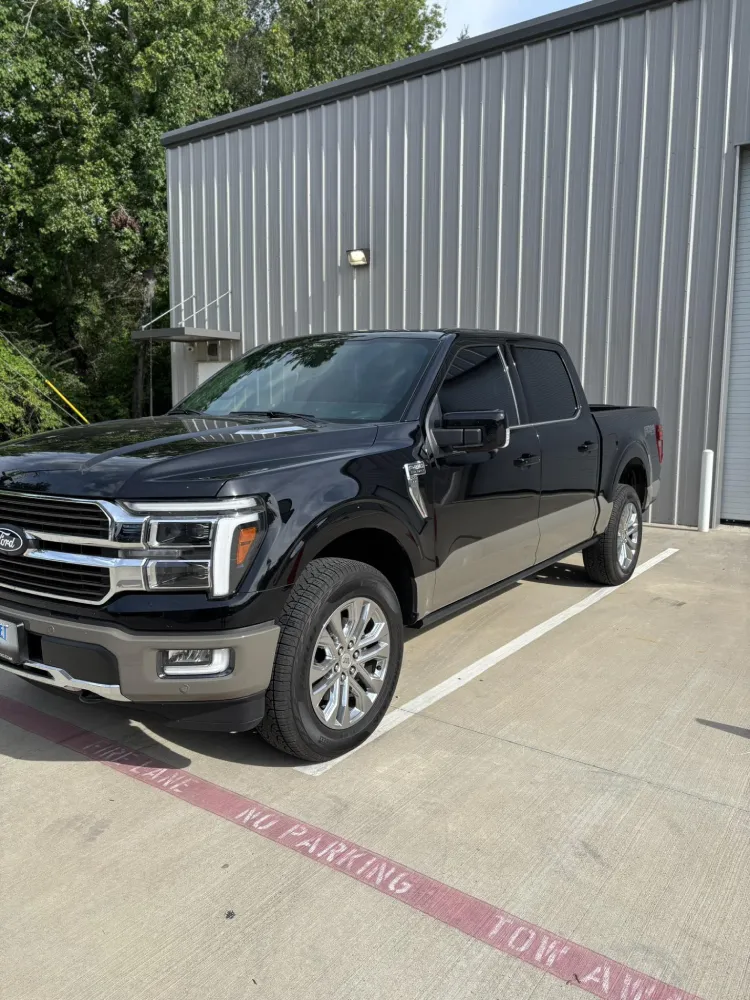
Misconception: Dark Tint Equals Better Performance
One of the most persistent misunderstandings in automotive customization is that a darker tint automatically provides better protection or reduces heat.
Technical Clarification
- Heat rejection is determined by film composition, not darkness level
- UV protection is typically high across most quality films, regardless of shade
- A lighter ceramic film can outperform a darker dyed film in heat reduction
- Optical clarity often decreases as darkness increases in lower-quality films
In real-world usage, drivers upgrading through professional window tinting in Woodlands, TX, often notice that switching to ceramic films improves comfort without requiring extreme darkness.
Structured Guide: How to Choose the Right Tint Percentage
Selecting the correct tint requires balancing safety, comfort, and legal requirements.
Step-by-Step Process
- Identify primary driving conditions (night-heavy, mixed, or daytime-focused)
- Evaluate privacy needs based on where the vehicle is parked
- Review legal VLT restrictions for your region
- Choose film type based on performance (ceramic recommended for most users)
- Prioritize visibility, safety before aesthetic preference
This structured approach prevents one of the most common mistakes: over-tinting front windows, which reduces nighttime safety.
Company Expertise in Precision Tint Installation
At Pavilion Auto Studio, tint installation is treated as a controlled technical process designed around real-world driving conditions. Each vehicle is assessed individually to determine how factory glass, lighting environment, and driver usage patterns interact with film performance.
Installations are performed using precision cutting systems and controlled application techniques to ensure:
- Clean optical edges with no distortion zones
- Long-term adhesion stability under heat exposure
- Accurate alignment across curved glass surfaces
- Consistent performance across all windows
In many cases involving window tinting focuses not on making vehicles darker but on achieving optimal clarity, heat rejection, and safe night-driving performance through carefully selected ceramic film systems.
Choosing Tint That Enhances Safety, Comfort, and Performance
Window tint percentage is a technical decision that affects how safely and comfortably a vehicle can be driven in real-world conditions. The best results come from balancing visibility, privacy, and heat rejection using quality film technology rather than relying on darkness alone.
For drivers seeking professionally calibrated installations, Pavilion Auto Studio provides precision tint solutions designed to enhance driving comfort, protect interiors, and maintain safe visibility in all conditions.
Contact us today to schedule a consultation and upgrade your vehicle with professionally engineered window tinting solutions.
Frequently Asked Questions
What tint percentage is safest for night driving?
Most drivers achieve the best balance at a VLT of 35% or higher on front-side windows.
Does a darker tint improve heat rejection?
Not necessarily. Heat rejection depends on film technology, especially ceramic and carbon layers.
Is 20% tint safe for daily driving?
It can be safe for rear windows, but may reduce visibility on front-side windows at night.
What is the best overall tint level?
Ceramic film in the 30–50% range offers the strongest balance of clarity, comfort, and protection.
Does factory tint provide enough protection?
Factory tint is usually light and primarily cosmetic, not designed for high heat rejection performance.