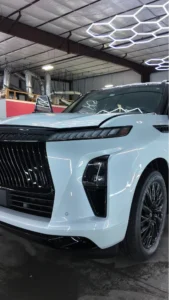

Existing paint damage must be repaired before installing paint protection film (PPF) if the surface is no longer smooth, structurally stable, or capable of supporting consistent adhesive bonding. In practical terms, this includes anything beyond light cosmetic imperfections, such as swirl marks, specifically chips, deep scratches, oxidation, etching, or clear coat failure.
If these issues are not corrected beforehand, the film will lock them in permanently and often make them more visible due to the high optical clarity of modern PPF systems.
How Professionals Evaluate Paint Before Installation
In real-world automotive protection environments, paint evaluation is a structured diagnostic process. A quick visual inspection is not enough because modern clear coats can hide defects until they are examined under controlled lighting.
Standard Pre-Installation Inspection Process
- Decontamination wash
- Removes tar, iron fallout, road film, and bonded contaminants
- Ensures defects are not hidden by surface buildup
- Lighting inspection using high-CRI LEDs
- Reveals swirl marks, etching, sanding marks, and holograms
- Scratch depth testing
- Fingernail assessment determines whether damage is surface-level or structural
- Paint thickness measurement (when necessary)
- Identifies thin paint areas or previous repainting
- Panel-by-panel defect mapping
- Document all imperfections before correction begins
This process is essential because many defects become visible only after the surface is fully cleaned and properly illuminated.
Paint Damage Severity: What Must Be Repaired vs What Can Be Left
Not every imperfection requires correction. The key distinction is whether the defect affects the clear coat integrity or the surface uniformity required for film adhesion.
Condition Assessment Table
| Paint Condition | What It Looks Like in Practice | Requires Repair? | Why It Matters |
| Light swirl marks | Fine circular scratches visible in sunlight | No (optional correction) | Cosmetic only, no adhesion risk |
| Surface haze | Slight dullness or cloudiness | Recommended | Reduces gloss under film |
| Water spotting/etching | Mineral or chemical marks etched into the clear coat | Yes | Can remain visible permanently |
| Deep scratches | Nail catches in the groove | Yes | Breaks surface uniformity |
| Rock chips | Missing paint exposing primer/metal | Yes | Creates air pockets and adhesion voids |
| Oxidation | Chalky or faded finish | Yes | Indicates degraded clear coat |
| Clear coat failure | Peeling or flaking layers | Full repaint required | Structural paint failure |
Why Paint Correction Matters Before PPF
Paint protection film is engineered to enhance and preserve existing paint, not correct it. Because of its clarity and tight adhesion, it will reproduce whatever is beneath it with high fidelity.
What Happens If Damage Is Not Repaired
- Chips remain visible as trapped voids under the film
- Scratches appear sharper due to light refraction
- Etching becomes more noticeable under glossy film
- Uneven edges create lifting points over time
- Contamination trapped under the film cannot be removed later
In professional environments, it is common for vehicles to appear “clean” at first glance but require correction upon inspection under proper lighting.
Surface Requirements for Successful Installation
Adhesion Stability
The paint must be fully cured, bonded, and free of compromised layers that could separate under film tension or during environmental changes.
Surface Level Uniformity
A smooth, even surface ensures consistent adhesive contact and prevents trapped air pockets or distortion.
Edge Integrity
Chips and scratches must be leveled so film edges remain sealed and resistant to lifting or contamination.
Optical Consistency
The final surface must reflect light evenly without amplifying imperfections once encapsulated.
Why a Professional Inspection Matters Before Installation
A thorough inspection helps determine whether the vehicle’s paint is ready for film installation or requires correction first. While some imperfections are purely cosmetic, others can compromise adhesion, durability, and the final appearance if they are left untreated.
During a professional assessment, installers evaluate the paint condition under specialized lighting, inspect for chips, scratches, oxidation, prior repairs, and contamination, and recommend appropriate preparation before installation. This process helps ensure the film bonds evenly and delivers the long-term protection it is designed to provide.
For vehicle owners considering paint protection film in College Park, TX, choosing an installer that performs a comprehensive paint evaluation before installation can significantly improve both the appearance and longevity of the finished result.
Real-World Inspection Examples From Field Work
In practical installation settings, paint condition often varies significantly even between similar vehicles.
A recent evaluation of a daily-driven SUV in Alden Bridge revealed heavy swirl concentration that was not visible under normal lighting conditions. Under inspection lighting, the defects were significant enough to require multi-stage correction before film application.
In another case in Cochran’s Crossing, a luxury coupe with prior bodywork showed inconsistent paint hardness across panels. This required additional refinement to ensure uniform bonding performance during installation.
A separate inspection in Indian Springs identified stone chips that initially appeared cosmetic but extended to primer exposure. Without leveling and touch-up repair, these areas would have resulted in visible defects and potential adhesion failure beneath the film.
These examples reflect a consistent reality in professional work: paint condition must be verified scientifically, not assumed visually.
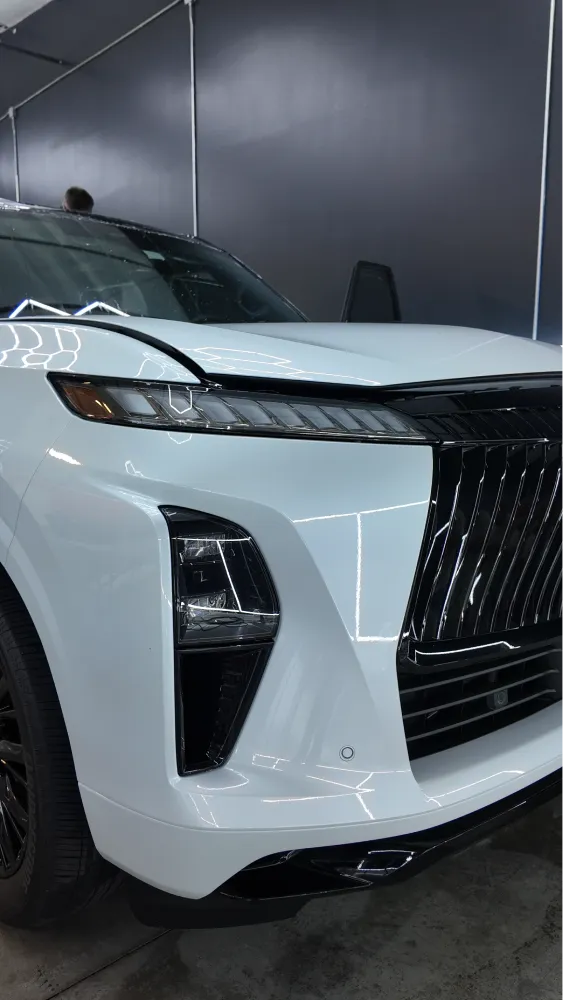
Misconception: “PPF Will Hide Existing Damage”
One of the most common misunderstandings is that PPF can conceal imperfections. This is incorrect in practice.
Why This Is False
- PPF is optically transparent and enhances surface visibility
- Light refraction increases defect contrast
- Air pockets form over uncorrected chips or scratches
- Defects become permanently sealed and cannot be corrected later
Rather than hiding issues, the film effectively locks them in place beneath a highly reflective layer.
When Paint Damage Does NOT Require Repair
Some imperfections fall within acceptable limits for direct installation after cleaning and decontamination.
Acceptable Conditions
- Very light swirl marks within the clear coat
- Minor wash haze without etching
- Factory texture variations
- Extremely shallow surface marring only visible under extreme lighting
In these cases, installers may proceed without correction, provided adhesion testing confirms surface stability.
Impact of Surface Preparation on Long-Term Film Performance
Improper preparation is one of the leading causes of premature PPF failure.
Common Long-Term Issues
- Edge lifting around untreated chips
- Adhesion failure due to embedded contamination
- Visible defects amplified under film
- Reduced durability from uneven bonding surface
- Moisture intrusion in compromised paint areas
For owners investing in premium protection solutions like paint protection film in College Park, the quality of preparation directly determines longevity and visual outcome.
Key Repair and Preparation Methods
Paint Correction
A controlled polishing process that removes surface defects while preserving clear coat thickness.
Chip Filling and Leveling
Application of color-matched material to stone chips, followed by surface leveling for a uniform finish.
Panel Refinishing
Full repainting of a panel when damage exceeds correction limits or paint integrity is compromised.
Wet Sanding
Precision leveling technique used to remove severe surface irregularities prior to polishing.
Automotive Protection Standards and Installation Philosophy
High-quality paint protection work is based on preparation discipline rather than material application alone. Professional standards prioritize:
- Preserving original paint whenever possible
- Correcting structural defects before sealing surfaces
- Ensuring chemical and mechanical compatibility between paint and adhesive
- Maintaining long-term optical clarity and durability
This approach ensures that protection enhances- not masks- the vehicle’s true condition.
For vehicle owners researching College Park, TX, paint protection film, a comprehensive paint inspection before installation helps ensure optimal adhesion, clarity, and long-term performance.
Surface Preparation Determines the Final Outcome
Determining whether paint damage needs repair before PPF installation comes down to one principle: if the defect affects surface integrity, it must be corrected before film application. Skipping this step leads to visible imperfections, reduced adhesion, and a shorter film lifespan.
For vehicle owners considering long-term protection with paint protection film, Pavilion Auto Studio emphasizes that proper inspection and paint correction are essential to achieving a seamless, durable, and long-lasting result.
To ensure your vehicle receives a professional evaluation and installation to meet performance and clarity standards, contact us for expert consultation and service.
FAQ: People Also Ask
How do I know if paint damage needs repair before PPF?
If the defect breaks the clear coat, catches a fingernail, or exposes underlying layers, it must be corrected before installation.
Can rock chips be covered without repair?
No. They must be filled or leveled first; otherwise, they will remain visible and create adhesion voids.
Is paint correction always necessary before PPF?
Not always, but most vehicles benefit from at least light correction to ensure optimal clarity and bonding quality.
Will PPF fix existing paint damage?
No. It preserves the existing condition but does not restore or repair underlying defects.
How long does proper preparation take?
It depends on the condition, ranging from a few hours for light correction to multiple days for heavily damaged paint.