

Scratches disappear after paint correction when they are confined to the clear coat and can be safely leveled through controlled machine polishing. They remain visible when they extend beyond the clear coat into the basecoat or primer, where polishing can no longer physically remove material. The process is not “erasing damage” but refining the surface until it reflects light uniformly again.
The difference in outcome comes down to paint structure, defect depth, and how much clear coat can be safely removed during correction.
How Automotive Paint Layers Control What Can Be Corrected
Every modern vehicle finish is built in multiple layers, and paint correction in College Park, TX, only affects one of them.
- Primer layer: Bonds paint to metal and prevents corrosion
- Basecoat layer: Provides color
- Clear coat layer: Transparent protective top layer responsible for gloss and UV protection
Most visible imperfections are located in the clear coat. This is why polishing can dramatically improve appearance without changing the vehicle’s color.
In practice, technicians often discover that what appears to be a “deep scratch” is actually confined to the clear coat and responds well to multi-stage correction. However, once damage reaches the basecoat or primer, the defect becomes permanent from a polishing standpoint.
Why Some Scratches Are Fully Correct While Others Are Not
The ability to remove a scratch depends on physical limitations rather than appearance.
1. Depth of the Scratch
Clear coat thickness is limited, typically ranging from 30–50 microns depending on the manufacturer and prior refinishing.
- Light surface defects: fully correctable
- Moderate defects: partially correctable
- Deep scratches: not correctable without repainting
Depth is the most important factor determining whether a defect disappears or remains visible after correction.
2. Type of Damage Present on the Surface
Different forms of damage respond differently to polishing:
- Swirl marks from improper washing → usually removable
- Fine haze or micro-marring → removable with refinement
- Isolated deep scratches → may remain visible
- Rock chips or impact damage → not removable
In real-world detailing work, swirl-heavy paint often shows the most dramatic transformation because the damage is shallow and uniform across the surface.
3. Clear Coat Hardness and Manufacturer Differences
Clear coat behavior varies significantly between manufacturers. Some coatings are soft and correct easily but mar quickly, while others are extremely hard and require more aggressive polishing systems to achieve similar results.
This variation is why professional detailers adjust polishing combinations on a panel-by-panel basis rather than relying on a single method for the entire vehicle.
4. Correction Intensity and Technique
Paint correction typically involves multiple controlled stages:
- Cutting stage: removes defects by leveling the clear coat
- Polishing stage: refines surface clarity
- Finishing stage: restores gloss and optical depth
The more aggressive the correction stage, the more material is removed. However, professionals must balance correction with paint preservation. If too much clear coat is removed, long-term durability is compromised.
5. Safety Limits of Paint Thickness
Every vehicle has a finite amount of clear coat available for correction. Technicians measure paint thickness before starting work to determine how far the correction can safely go.
When safe limits are reached, deeper scratches are intentionally left behind even if they remain slightly visible. This is a controlled decision to preserve the integrity of the paint system.
Comparison Table: Correctable vs Permanent Scratches
| Category | Correctable Damage | Permanent Damage |
| Location | Clear coat surface | Basecoat or primer |
| Appearance | Swirls, haze, light marks | Deep scratches, chips |
| Cause | Washing, drying, and dust contact | Impact, keying, abrasion |
| Repair method | Machine polishing | Touch-up or repainting |
| Outcome | Restored clarity | Reduced visibility only |
Step-by-Step Paint Correction Process Explained
1. Initial Inspection and Measurement
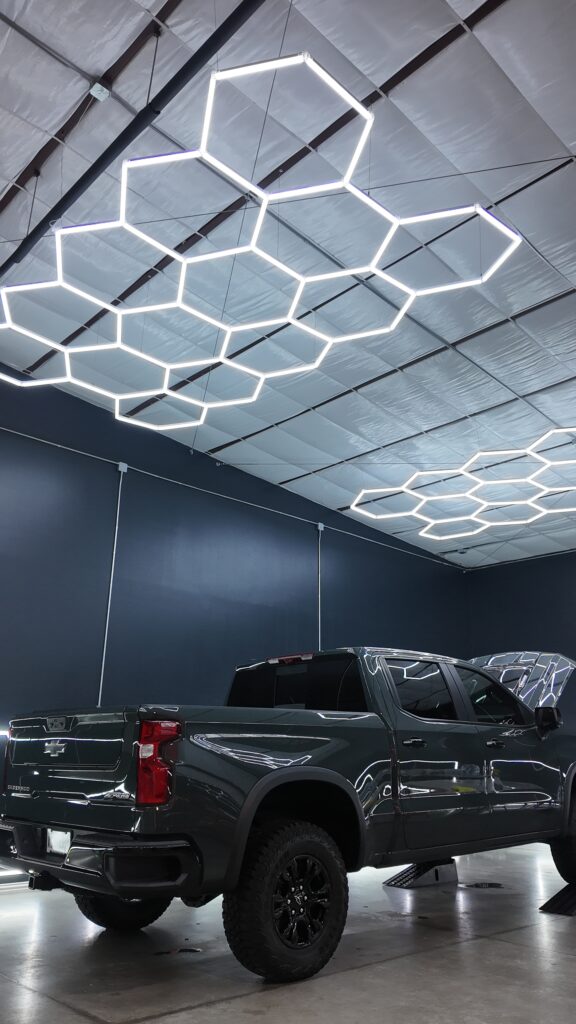
Each panel is examined under controlled lighting to identify defects and is measured using a paint thickness gauge. This ensures correction is performed safely.
2. Decontamination Wash
The surface is cleaned to remove dirt, road film, and residues that interfere with polishing accuracy.
3. Mechanical Decontamination
A clay treatment removes bonded contaminants that cannot be removed through washing alone.
4. Compounding Stage
A cutting compound is used with a machine polisher to level the clear coat and remove visible defects.
5. Polishing Stage
A refining polish restores clarity by removing haze left behind from compounding.
6. Final Inspection
The surface is checked under high-intensity lighting to confirm a uniform finish.
Essential Paint Correction Terms
Clear Coat
The transparent protective layer that determines gloss, UV resistance, and surface durability.
Swirl Marks
Circular micro-scratches caused by improper washing or drying techniques.
RIDS (Random Isolated Deep Scratches)
Deep scratches that remain visible after correction due to penetration beyond the clear coat.
Cutting Compound
An abrasive product used to level defects in the clear coat.
Micro-Marring
Fine haze was created during polishing, requiring refinement.
Paint Thickness Gauge
: Instrument used to measure coating depth before correction begins.
Misconception: “Every Scratch Can Be Fully Polished Out”
A common misunderstanding is that polishing can restore any scratched surface to perfect condition.
In reality, polishing is a controlled leveling process that removes a thin layer of clear coat. It cannot rebuild missing paint or repair damage that has penetrated deeper layers. When a scratch extends into the basecoat or primer, polishing can only soften its appearance, not eliminate it.
This is why professionals rely on inspection and measurement before any correction begins, rather than attempting to remove all defects at all costs.
Real-World Detailing Outcomes and Observations
In practical detailing environments, scratch-correction results vary significantly depending on vehicle history, maintenance habits, and environmental exposure.
Vehicles that are hand-washed regularly tend to develop uniform swirl patterns that respond extremely well to correction, often requiring only a single- or two-stage process to restore clarity.
Vehicles exposed to automatic brush washes typically present heavier micro-marring across multiple panels, requiring more aggressive compounding before refinement.
In cases involving repainted panels, technicians often encounter inconsistent clear coat hardness. This requires adjusting polishing methods for each section to avoid uneven finishes or excessive material removal.
During a recent service involving paint correction in College Park, TX, most defects were identified as surface-level swirl marks, which responded well to a controlled multi-stage correction process. Only a small number of deeper isolated scratches remained due to their depth within the coating system.
Why Paint Correction Is Part of a Larger Protection Strategy
Paint correction significantly improves surface clarity and prepares the paint for protective applications such as ceramic coatings or paint protection film.
A properly corrected surface:
- Reflects light more evenly
- Enhances gloss and depth
- Improves coating bonding performance
- Reduces visible surface contamination
However, correction does not prevent new damage. Without ongoing protection and proper washing techniques, new defects will form over time.
Balancing Correction and Paint Preservation
One of the most important principles in professional detailing is restraint. The goal is not maximum defect removal but optimal visual improvement with minimal clear coat loss.
Aggressive correction may temporarily improve appearance but reduce long-term paint durability. This is why experienced technicians evaluate each panel individually and adjust correction levels based on condition, thickness, and risk.
In services involving College Park, TX, paint correction, this balance is especially important when working on newer vehicles or high-value finishes where preserving factory paint is a priority.
Scratch Depth Determines Everything
Paint correction works by leveling the clear coat to remove surface defects and restore clarity. Light scratches disappear because they exist within that layer, while deeper scratches remain visible because they extend beyond what polishing can safely reach.
Understanding this distinction leads to more realistic expectations and better long-term care decisions for your vehicle’s finish.
For professional evaluation, correction, and long-term surface preservation, Pavilion Auto Studio provides precision detailing services focused on protecting and enhancing automotive finishes.
Contact us today to schedule an assessment and learn the most effective solution for restoring and protecting your vehicle’s finish.
Frequently Asked Questions
Why do some scratches disappear after polishing while others stay?
Because only defects within the clear coat can be safely leveled through polishing.
Can deep scratches be made less visible?
Yes, polishing can reduce their appearance, but full removal requires repainting.
Does paint correction remove paint?
Yes, but only a controlled microscopic layer of clear coat.
How long do correction results last?
The leveling effect is permanent, but new defects can develop over time.
Is paint correction safe for all vehicles?
Yes, when performed with proper measurement and controlled techniques.